It is quite a time to be traveling to Moscow, Russia for my American Arts Incubator Exchange with ZERO1. As both an artist and a cultural ambassador, this type of opportunity exemplifies how art has the potential to change and create new dialogue around social issues. I use my past experience in community centers and NGOs to cultivate an awareness of inclusive spaces as a way to better understand the social dynamics at play in community. I’m fascinated by how people gather, create diversity and cultivate art to share stories and ideas.
My technological pursuits in my art practice have been marked by this sensibility to use emerging technology as tools to empower and engage. Much like social media, I have keen interests in the combination of community, art and technology to engage, immerse and play in new and innovative ways. As a recent MFA graduate of Art Center, College of Design in Pasadena, CA, I’ve come to view technology through many lenses. With a graduating year spent looking at ways wearable technology can create new experiences that come from shifting our perspectives, I've gained a deeper understanding of how future technologies and experiences can perhaps begin to create empathic experiences.
To be addressing the social challenge of Disabilities Inclusion in Moscow this spring is a natural progression from this understanding of inclusive empathy. By doing so, I hope to better understand how wearables are beginning to alter and augment the human body.

This presents an interesting perspective on how the unique challenges people with disabilities face can provide new insights to the ways wearables and new media can transform our understanding human ability, and how we see other people.

How can relationships begin to heal and attitudes begin to shift through the power of play and media? Through artistic expression and tools of creation, I will play with mixed performative storytelling through the mediums of color and light. Thinking about social inclusion in this way can present the art field with alternative ways of seeing, hearing and perceiving, especially in the exhibition space.
I’m grateful to be collaborating with the partner organization, Garage Museum of Contemporary Art who curated the show Co-Thinkers last year. I’m excited to apply a process that lies at the intersection of socially engaged art and technology to better understand one another and ourselves, thereby shifting the way we think about “abilities” in unexpected ways.
I am not lost in Guatemala City yet, but am still in my comfortable home writing this blog. However, I have started my travels by attending the American Arts Incubator orientation week in California. This was the week for “getting you ready to leave, dude." I had never been to California and I loved it. San Francisco has a bit of a Latin American city flavor.
After an 8-hour flight and ½-hour train ride I arrived at the orientation, excited about getting right down to work. We started with an icebreaker and an overview of the week, but the next day we really got to work. We covered the challenges of being abroad, details on how to run our projects, video documentation, had lots of discussions and exercises... it was a jam-packed week!
Midway through the week, we had to present our projects to mentors and other invitees in just 6 minutes. Personally, I like the less-is-more-concept so was comfortable but I was not expecting the fantastic feedback I received. I presented my idea for a Portable Makerspace and got positive feedback from the mentors. People seemed to like the fact that I was born in Guatemala and am now returning to share my knowledge.
After the presentation we got a chance to mingle at CounterPulse, a local gallery, and a moment of magic passed. While I was eating my dinner in silence, reflecting about my day, I felt someone looking at me. A man approached to introduce himself. We each felt the other looked familiar but couldn’t remember why. It turned out we had each been invited to the Information Technology Festival at Galileo University in Guatemala, but in different years. We recognized each other from photos – we live in such a small digital world.

I was excited because it was further proof to me that Guatemala is trying to create a real footprint in the technology world now. Our Mayan ancestors were inventors and scientists, innovative and creative problem-solvers. I am a strong advocate of the idea that we should be harnessing our legacy and creating new pathways in Guatemala, rooted in innovation.
During orientation week, I had the chance to be challenged and explore new ideas, something I love to do. Friedrich Nietzsche said, “When we are tired, we are attacked by ideas we conquered long ago.” I want my Guatemala experience to be full of new ideas to be conquered.

I am beginning to solidify my proposal and workshop series for my upcoming trip to Medellín, Colombia with ZERO1 in partnership with the U.S. State Department’s Bureau of Educational and Cultural Affairs. The exchange will take place in May and June 2017.
Colombia has seen civil conflict for nearly 60 years. In recent years, they've been striving for peace within the communities that have been victimized. Current negotiations between the FARC and the Colombian government are at a standstill, meanwhile President Santos has been awarded the Nobel Peace prize for his efforts in the peace process.
These issues and their complexities can be intimidating and overwhelming to address, which is why I feel it is more important than ever to create community. Through art we can build community and address difficult issues that are often hard to talk about. In Colombia, I will be researching and strategizing ways to create “safe spaces” and communal environments where creativity and openness become the founding principles of a community-driven arts collective. This may take the form of a maker-space, an artist collective, or even a virtual hub to connect individual artists and their interests to a central point of engagement. The space itself, will strive to be inclusive of all people from all backgrounds with a strong emphasis on collaboration.
My personal interests combine art, technology, music and astrophysics to convey information of the natural world into ideas that can reveal the patterns and connections of lifeforms found throughout nature. Using my artistic practice as a starting point, I will address the needs of the group through a series of interrelated workshops focusing on the tools widely available to digital artists of the 21st century. As a team, we will explore the ways in which artists can help facilitate change within social and political processes. This project and workshop series aims to give voice to those who are often left out of the conversation and most dramatically affected.
I look forward to sharing more as this project develops!
I have a lot to digest after the intensive American Arts Incubator orientation retreat with ZERO1 in rainy San Francisco. Kate Spacek, Shamsher Virk and Michelle Peregrin provided valuable support and resources. Fellow AAI artists Balam Soto, Elaine Cheung, Scott Kildall and Nathan Ober offered much inspiration in their creative work and innovative plans for their exchanges focusing on water pollution, disability inclusion, economic equity and inclusive peace.
In April – May 2017 I will have the honor of collaborating with an exciting group of artists, activists and organizations in Phnom Penh, Cambodia. In partnership with our host organization, Bophana Audiovisual Resource Center, we will be developing a set of media projects focused on the challenges of Environmental Sustainability and Deforestation. Updates and feedback can be followed on our Exchange Facebook Page. By using collaborative video, augmented and virtual reality to layer memories and imagination onto the world around us, we will create time lenses that reveal pathways to a sustainable future.

After 30 traumatic years of war, Cambodia’s economy has been growing at one of the fastest rates in the world. In what ways can an improved standard of living be achieved while also increasing sustainability? Societies with modest energy and resource usage are actually already much closer to achieving this balance than high-use countries. Throughout the exchange we will practice renewable energy skills by powering the workshop and projects with solar power. Krousar Solar will be a key local resource for our solar power technology needs. Cambodian society has a great potential to develop the models that lead us to a sustainable world.
We will design the final exhibited projects to be self-sustainable entities that have their own built-in renewable power generators. What types of energy do the projects require? What power sources can be designed to sustain them? The balancing skills of sustainability are games that, if played well, can be won.
Resources and Potential Participants:
• Young Eco Ambassadors
• Sustainable Green Fuel Enterprise (SGFE)
• Fauna and Flora International
• Zaman University - Department of Digital Arts & Design
• Young Southeast Asian Leaders Initiative
• USAID - Supporting Forests & Biodiversity (SFB) project
• Open Development - Cambodia
The first week of 2017 was orientation week for the American Arts Incubator program. I met the four other artists and soon associated their names with their respective exchange countries: Elaine Cheung (Russia), Michael Kuetemeyer (Cambodia), Nathan Ober (Colombia), and Balam Soto (Guatemala)
My exchange country will be Thailand, where I’ll be staying in the multilayered metropolis of Bangkok for 28 days in May/June.
Thailand sounds like an exciting place to visit, and of course it is. However, I’m approaching this not as a tourist, but rather as an arts ambassador. The issue that I’ll be addressing in my exchange is environmental health and specifically water pollution in the Chao Phraya River. This is especially relevant to Thailand, which has undergone rapid industrialization in the last couple decades with environmental regulations lagging behind.
In Bangkok, I will engage in a dialogue around community data-collection and mapping though DIY science with a focus on water pollution, resulting in data-visualization installations and sculptures.
My time will be split about 80/20 leading public workshops and creating my own artwork.
This ties into my current area of focus: creating physical data-visualizations, such as the sculptures of the water infrastructure of San Francisco. It also ties back to my longstanding history of working in art and education at institutions such as the Exploratorium.

I learned many things this week, including, but not limited to: better patience for long meetings, organizational models for workshop engagement, the Drupal blogging platform, art-budgeting in a foreign country, and organizational techniques.
But most of all, I learned that I have an amazing organization, ZERO1, that will be supporting my work there as well as a cohort of four other artists I can learn from. Trust.
March 2017 will be a memorable time. For a long time now, I have daydreamed of finding an opportunity to go back to my native Guatemala to make art and support others in their passions, dreams, and ventures. I searched without success until one evening I received a series of emails from a mailing list. Among these emails I found the American Arts Incubator RFP and saw on the short list of countries participating exactly what I had been searching for — Guatemala.
I read it over about 4 times to make sure I was understanding correctly before I running to wake up my wife and show her the opportunity. My groggy and very patient wife read the RFP, looked at me and said, ok, let’s get writing — tomorrow.
I considered proposing projects ranging from projection mapping to E-textiles, made a few drafts to discuss with my wife, did a lot of research, and finally settled on E-textiles.
After a few months of internal agony waiting for the finalists to be announce, I finally received the email one Saturday afternoon while working in my studio. It was there in my inbox, the emails acknowledging my acceptance into the American Arts Incubator Guatemala project. I literally jumped from the chair and called my family to share the news.
Then the real work began. It has been an awesome experience developing the accepted project, from the research to the elaboration of the project details. The highlight of the preparation was to meet and get to know the amazing folks that work so hard to make this possible, especially Kate and Shamsher. This team can make magic and help us to be ready to bring new media art and technology to the world.
I am counting the days and every day the excitement grows, as does the project I’m developing. Nos vemos pronto.
Balloon mapping, using a tethered red weather balloon with a small time lapse camera attached, was a great way to meet curious walkers along the water’s edge. It was also an amazing way to explore and document areas along Dunedin’s coastline that are vulnerable to sea level rise. Thanks to the toolkit from Public Lab, helium from the Otago Museum, and an unusually sunny day, we documented 7 coastal locations.
The ZERO1 New Zealand Arts Incubator program was a rare opportunity to learn and explore climate change issues on the South Island of New Zealand with amazing community partners and participants. Many of the ecological challenges facing the South Island, such as sea level rise, rivers polluted by industry, drought, a warming ocean, ocean acidification, and endangered animals, are issues shared across the globe.
Next Steps
The local New Zealand incubator participant artists are working on prototype 2 of their projects to be featured at Dunedin’s Vogel Street Party and the Art and Futures conference at the Dunedin School of Art this October. We are looking forward to seeing these great projects evolve and create more community dialog about art, climate change and resiliency planning in New Zealand.
The Climate Kit exhibition is planning a show in collaboration with the California College of Art and the University of California at Davis in the future. We will be launching our global project submissions on the climatekit.org website soon.
Hear more about Climate Kit on the radio!
- "Climate Kit: When Technology meets Climate Action" — Radio New Zealand
- Sustainable Lens: Resilience on Radio — Otago Access Radio
The Climate Kit: Field Tools from the Anthropocene exhibition at the Otago Museum was a big success with a great turn out on opening night, despite the morning ice storm. Check out this interview we gave during the final hours of the installation process with 39 Dunedin TV.
The Living Map
Bridie Lonie, Luke Easterbrook, Beth Ferguson, Sara Dean
The Living Map adds three-dimensionality to the projections often used in modeling the effects of climate change. Historical, present and future geological projections provide important data for the resiliency planning regarding coastal sea level inundation. The digital map layers are from Surging Seas, the Dunedin City Council, the Otago Regional Council, and the National Library. This project was led by Bridie Lonie from the Dunedin School of Art along with Sara Dean and Beth Ferguson from the ZERO1 New Zealand Arts Incubator with the help of Luke Easterbrook from the University of Otago, the Otago Museum, and Workspace and Andrew Early at Otago Polytechnic.
Dunedin Youth Map
Karen Parker, Jen Smith, Tahuna Normal Intermediate School 7th grade class
The Dunedin Youth Map was led by 7th grade teacher, Karen Parker, of the Tahuna Normal Intermediate School. She developed civic icons with her students and then created a community participatory map for the Otago Museum Climate Kit exhibition. The public was invited to interact using a combination of the icons, emoji, and eco icons from the Green Map System. Karen’s 7th grade class joined us for a day of balloon mapping to document their sports field, a site that is vulnerable to flooding due to saltwater inundation with sea levels rising on the coast of South Dunedin. The class plans to continue to develop the Dunedin Youth Map project this year.
Stones and Bones: A Geological and Paleontological look at New Zealand
Amy Smith, Katherina Marino, Rebecca John
Most people do not think about climate change on a geological scale. The Stones and Bones exhibit is meant to show visitors that the rocks and fossils beneath our feet tell a story. We can learn about paleoclimates and see how vastly different our surroundings used to be. The Stones and Bones project shows a rock core columns and a panel engaging geological history and human engagement with rocks and fossils, with particular emphasis around the Otago region.
Shedding Some Light: Dunedin’s Dark Skies Initiative
Emma Hanisch, Conor Feehly, Ravitesh Ratnam, Colin Smillie
This project relates to the Dark Skies Initiative proposed by the Dunedin City Council. They are considering the implementation of shielded LED street lighting to replace the current sodium models. While this is a council vote, the public is involved in the decision-making process. Therefore, our aim was to create an exhibit which will initiate interest in light pollution and solutions. We provided information on the different options the council are considering along with examples of lighting solutions currently being implemented across the globe. Elements of the exhibit include information panels on doors covering many different topics related to the Dark Skies Initiative, and a box containing alternate street light models and images of the night sky from Dunedin.
This past weekend marked the end of our workshops and the distribution of our community small grants. On Saturday, at the Otago Museum, we heard from community groups about local issues ranging from sea level rise, to erosion, to neighborhood resiliency, to light pollution, to geologic time scales of climate change.

Four project proposals were selected to receive small grants and be developed further in the next two weeks. All project concepts are relevant to climate issues facing Dunedin and the surrounding Otago region. All four of the projects have larger communities and experts that they are drawing on for resources, ideas, and longevity plans. We were impressed with their grasp of the short- and long-term plans for the project. We’re excited to see the projects take shape for the exhibition. The four projects are:
-
Bones and Stones: a “field guide” for New Zealand geology, including two enlarged “core samples” showing the geologic long-view of the environment.
-
Shedding Some Light: a project that examines the proposed lighting solutions for high-efficiency street lighting and “dark skies” proposals for the town to be able to enjoy the Aurora Australis by limiting light pollution.
-
Youth Community Map: focusing on climate change resiliency and vulnerable sites near the Tahuna School in South Dunedin.
-
Living Map: a data-enabled relief map of the Dunedin area for community conversation about the past, present, and future geography of this vulnerable coastal city.
The projects will be exhibited, along with the work we produced during our time in Dunedin, at the Otago Museum August 5-22.
This weekend we started a series of community workshops at Otago Museum. Yesterday we kicked things off by discussing and mapping the various climate resources and threats in the Dunedin area. We learned a lot from the community about the bay, its estuaries, and mining history as we located areas of preservation and vulnerability. Dunedin is a fascinating convergence of urban and natural forces, in a picturesque setting. It was exciting for us to learn more about the historical context of a city that has taken shape over the last 200 years.

We will continue to conduct public workshops over the next six days with community members, university students, and museum guests that will look at the city through various climate lenses, including environmental sensing, aerial photography, coastal mapping, and iconography.

Meanwhile, we are learning so much about the local animal life and natural setting from the staff of the museum. We were given a tour of their collection of New Zealand land birds, including the extinct Moa, during which they explained the changing understanding of the bird’s stature over the last hundred years, from that of an upright ostrich to that of a kiwi with a low stance. Discussing science as an evolving understanding of the past is helpful for us as we think about how to work in the changing environmental conditions of the present.
To learn more, we recommend checking out the New Zealand Ministry of Environment’s Climate Change Projections for the Otago Region.
We are headed to New Zealand and have a huge week of events ahead of us in the wonderful South Island city of Dunedin. We are joining the Dunedin community in the midst of the country’s annual science festival (SciFest), in which we will be participating through two presentations and our ZERO1 American Arts Incubator workshop series. The festival this year is appropriately focused on Climate Change and Women in Technology. It’ll be a great way for us to learn about the local community's interests and concerns in climate science. We are looking forward to an educational and fun week as we hit the ground for our month-long cultural exchange.
Wednesday, July 13th we will be presenting an introduction to our work at a PechaKucha-style event, “What Inspires Me: Women in Science”. And Thursday we are giving a public artist talk “Tools and Fieldwork in the face of Climate Change." These two presentations, along with our access to other talks and events through SciFest, will be invaluable tools for us as we head into our community workshop this weekend.
Alongside the SciFest, we are also busy this week setting up our studio space in Gallery 1877 in Otago Museum, where we will be conducting our workshops and working this month in preparation for our Climate Kit exhibit. The staff of the museum already have been invaluable in orienting us to the community and region. We are thrilled to settle-in there.
We are honored to be included in this festival, to learn from so many scientists and educators working on these topics, and to be hosted by such an amazing institution as the Otago Museum. And we can't wait to update you on how it's all developing in coming days!
The Protected Land

Jack is a big dude and an equally big nerd for nature. The man is a machine-gun rattling off bullets of knowledge about everything he sees. “This bird is named Coleto, it eats insects, and has a white patch on its head- that’s why in Filipino we can call the bald people, "Hey Coleto!"
“This flower stays in bloom for six months.”
“This lake turned purple once a couple years ago because of the volcanic activity. They were worried it might release poison gas and kill everyone like at a lake that turned purple in another country.”

Jack is taking us on a scouting trip with Pong, our coordinator from the US Embassy. We are searching for places to build a new Art and Technology Laboratory with a focus on environmental health. He took us to a new nature preserve in a spellbinding site. Two 'twin-lakes' nestled against each other, perched atop a volcano, and surrounded by lush forest.
“The lake on the left of the ridge is actually 10 meters higher than the other next to it, so we know there is no hole in this narrow ridge dividing them.”

This amazing spot blew up 10,000 years ago. Its deep dark craters filled in with fresh water. The volcanic mound was overtaken by thick forest. Only about 10 years ago, the site was officially protected.
“It’s now illegal to pick even a single flower.”
Tree Poachers
On the drive up the mountain, we pass through fancy new real-estate developments owned by the rich, or foreigners, or just those aiming to cash in on future eco-tourism in this developing spot.
We come to a dead stop every fifty feet or so. When we met Jack at the tourism office, he laughed with us saying that if he had gone out with us, he would guarantee that we see at least 30 birds that we had never seen in our entire life (“lifers”). It turns out he was 100% serious about this. As soon as he got in the car that afternoon he said, “I thought we would be leaving much earlier… this changes my guarantee, but I think we will still get 30.” He uses his uncannily sharp eyes to pick out and identify birds on distant branches and trees. He can ID them based on just the subtlest of features. The technical birding term for this is 'jizz' (No, seriously, check Wikipedia). He gets the driver to constantly stop the car on our way up the mountain and slowly creep up on our prey.

We sneak out of the car over and over again as he guides our vision with a high-powered green laser-pen. The birds are true lifers for both of us with the Embassy. Strange features, long tails, bright gaudy colors, weird songs. Looking past the birds though, one starts noticing a pattern in the distance. Featureless bald patches infecting the mountain like a flea-ridden dog. While the volcano we're heading towards and the thin strip of road leading up to it are lush and green, the surrounding forest seem mangy. Tree poachers.
“There is a bird that is supposed to be extinct here on Negros Island, but I have seen this bird three times.”
Jack explains, “After the first two sightings, I got a cameraman to find it and get good proof with me.” We climbed up the ridge over there. Got up early, some coffee, some bread. Took all morning to get up and we waited. Suddenly we heard a strange sound, and the bird lands right behind me. It’s huge. The camera guy is all surprised and drops his camera. He picks it up to get a picture but then this other sound. CRACK. And a huge rustle of a tree falling down nearby scares it off. Tree poachers."
It’s hard to tell where they are stealing trees. Jack explains they build cases around their chainsaws which connect to tubes that pass through big drums of water. Chainsaw silencers. That’s how they could be so close to him on the mountain-side and only be detected when the tree actually starts falling.
After missing out on this special bird, Jack went to confront these tree poachers. “I tell them that this is protected land and it’s illegal to cut down trees. Then I notice the two M16’s they have laying out, and I shut up, and just walk away.”
Hemp Poachers
We go down into the crater and hop on a small catamaran. The lake is smooth and peaceful. Floating in the lake we are surrounded by a ring of wild greenery filled with hidden birds. There’s mist moving between nooks in the encompassing mountain, and everything looks like Jurassic Park. Pong and I continue our routine of sitting patiently, admiring the mist moving in and out of the trees and ridges, while Jack scans the sights and sounds for fresh birds.

We pull up to a waterfall and Jack gets excited. There are two shirtless guys working in a clearing right next to the park’s path. “Oh wow, this is very interesting to see, these are hemp-poachers!” Jack invites himself (and us) into their clearing where long silky hairs cover a fallen log. He smiles and gets them to (obligingly) show off the tools of their craft: simple blades embedded in logs, mechanisms for shredding trees into soft fiber.
“They come from about a day’s journey away. They hike here, camp for several days, then bring hundreds of pounds of the fiber to sell in the city. They can get about 10 times as much from this as shredding fiber in other places.” The poachers gave a quick smile pointing to how their tools worked, but their focus immediately returned to their labor. They shredded these trees, feverishly, non-stop. “On a good day, they can make 100 pounds of this material. They can sell it on the market for about 200 pesos.” This is $4 USD.
We keep walking down the path. We see the waterfall. We take pictures of it. It is pretty.
Bird Poachers
Driving back down the mountain, we pass a boy working at the gate. “You see him? His father was just killed by poachers a couple months ago.” Jack’s cheery, fast-paced demeanor drops a bit. “His father saw some people cutting down trees, so he got his radio and reported it. Actually it doesn’t matter if he actually reported it or not. People said he was the one who reported it. Well, one night the poachers came to his house and shot him. Now his son still works here at the park.” We sat and he continued, “You see it makes it very tricky to do this job. We want to protect the park and stop the poachers, but often it is too dangerous to do anything.”

Some moments pass. We were tired from the adventure, and this final story made the sadness of this environmental destruction real. After a bit of quiet traveling, Pong tries to lighten the mood with a question, “When did you become a birder? Have you always just liked birds?” Jack responds, “No, I used to poach them.”
This took us both by surprise. “What?” Pong asks to clarify. “Yeah, I would go out on hunts and kill many of these birds I am showing you…like those hornbills we saw.” “Why wouldn’t you just eat chicken instead of these endangered birds?” she replies, still quite puzzled by this revelation. “Oh, if I found a chicken, I wouldn’t even eat it. I could take that down to the market and sell it! I poached these birds for food. You can’t sell an endangered animal, but you can eat it if that’s all you have.” We sat there shocked for a while. He gave us a short moment for all this to sink in, and then went right ahead, matter-of-factly, into the technology behind such poaching. “You see we could get a small PVC tube, some alcohol, and some marbles for ammo, and then you would have a silent gun for hunting in protected areas.”
NOTE: I take full responsibility for butchering any of the facts, spellings, or parts of the story throughout this essay. My post is written from memory.
***
The writing above was the first journal entry I started writing for this Philippines art and environmental health project. This happened during the initial scouting trip, but it was such a strong experience, it took me time to assemble it coherently. The trip, the poachers, their technology, and Jack. These elements resonated with me during the entire Waterspace project here in the Philippines. People were destroying the reef. People were destroying the beach. People were destroying the mountain. They were coming up with clever ways to do so, and even maintain pride in the sophisticated ways they found to do it.

Jack had 9 children, two with severe cerebral palsy. He only stopped poaching because he was given the opportunity to use his brilliance to help protect the land and get paid for these abilities. He would have no qualms with going back to poaching if that was his only option to feed his family.
And that there is the problem. I used to think poachers were inherently evil people. Captain Planet would go fight piggish-looking villains with simple, deranged motivations like “I WANT TO CHOP DOWN ALL THE TREES!” But these were not villains. They are a result of what happens when we push people to the edges of society. They have to make decisions - choosing themselves or the environment. They aren’t normally destructive or violent unless they are pushed into it. People become animals when we make them that way.

The other problem is that nature dies slowly. The rest of us, having a nice time reaping the spoils of life within society, don’t get immediate feedback from the blight of a clear-cut mountaintop. We can’t feel the infinitesimal rise of the ocean, until it starts surrounding our house 20 years after burning the carbon we released into the atmosphere. Instead, we need to find ways to make people care about natural diversity for its own sake.
So there are two things we need to do:
- Make people within society care about what they are losing.
- Create opportunities for those at the fringes to preserve these priceless artifacts of our earth.
We can’t just slap down basic rules saying, “Don’t do this. This is protected area,” when there is a much louder voice saying, “Do this, you need money, you need food.” And this louder voice comes from us. It comes from our families needing nourishment. It comes from our communities demanding new consumer goods. It comes from us telling poor people that the reason they are poor is because they are not working hard enough.

We are killing off our own life support system. We need to protect our environment, and the way to do that is to first protect the poor and underserved humans.
I hope the BOAT Lab is able to do this, and can shine a light on these intermeshed economic and environmental problems.
More Than Love on the Horizon
After four weeks, lots of conversations and translations, hard work, and even some tears, we installed the More Than Love on the Horizon exhibition. We opened the show featuring my hologram project and the work of six community artists at Nha San Collective to an enthusiastic audience of over 200 people.
Among our honored guests, Michele Peregrin from U.S. Department of State’s Bureau of Educational and Cultural Affairs, Shamsher Virk from ZERO1, and U.S. Ambassador to Vietnam, Ted Osius.

We even had an Asian American Queer delegation from Los Angeles. Well, not an official delegation, but I was thrilled that my friends flew in from Los Angeles to show support.

But honestly, the most distinguished guest at our opening event was my mom. I’m sure when I came out to her 22 years ago, she had no idea what the future would hold for me. I can only hope I have made her proud with this opportunity to come back to her country and work with local LGBTQ community to tell their stories.

I loved that my mom came to help out. She cooked for the community artists while they were installing and even helped with the art installation.
When she met the Ambassador, her words were particularly evocative for me. My mom, the wife of a career Foreign Service Officer and mother of an openly queer daughter, leaned over and said to Ambassador Osius, one of only five openly gay Ambassadors in the U.S. State Department, "We have been waiting a long time for you."

In my remarks, my first thank you went out to the U.S Department of State. Thanks to the U.S. Department of State, my parents met, married, and made me. Years later, as a Fulbright Fellow, I was afforded the opportunity to meet many of the contemporary artists in Vietnam, a crucial step for my development as an artist post graduate school. The connections I made during my Fulbright were vital in the production of this project. Now, as an American Arts Incubator artist, I was able to return to Vietnam to complete this project that for me, as a Queer Mixed Race Vietnamese American woman, is so close to my heart. I was able to take my experience as an artist and community organizer and engage in social practice — facilitating workshops with LGBTQ community members to incubate creative strategies that address LGBTQ visibility and equality in Vietnam. Everything has come full circle for me.
I’m so proud of the work our community artists contributed to exploring LGBTQ visibility. Here are the projects and some photos from the opening party.
Community Artists Project Installations in the Gallery

Bùi Hoàng Long – Hanoi LoveHANOI LOVE
is a video series depicting stories of love and acceptance from the LGBTQ community and their families, friends, and lovers. The series shows that people identifying as LGBTQ are children, friends, and family members, who are the same as everybody else and should not be excluded from society.
Follow Long's work on Humans of Hanoi.
Check out some of these powerful videos:


Đinh Nhung - Mapping Queer Hanoi
Nhung has mapped queer spaces in Hanoi that are personal but also communal, especially of the older generation living in Hanoi. By making this map, Nhung wanted to learn more about hidden personal histories and create an opportunities for those stories and histories to be shared and made visible. Ultimately, sharing the connections and memory maps of different special places in Hanoi, she hopes we expand our love to each other and to the city.
READ MORE about Mapping Queer Hanoi

You can find a deeper interactive experience of Nhung's maps with "then and now" photos of some of the spaces she has mapped around the city. She is continuing to add content.


Ian Quee and Quyên Quyên - Ế
Ian and Quyên make “Ế”, a queer art and literary zine. As queers, they reject the notion that a straight relationship and its trappings (marriage, nuclear family, male-female roles, etc.) are the “default." They convey this message through original and curated art, photography, short stories, poetry, and pop culture reviews.

and download your own copy.

Vũ Kiều Oanh – Shelter of LGBTQ
"Vùng an toàn rộng mở - Shelter of LGBTQ," initiated by Vu Kieu Oanh and Group 6+ is collecting stories waiting to be heard. Stories by members of the LGBTQ community who suffered abuse and encountered prejudice in the past but still respect and love themselves. The stories are presented as audio files and Oanh has built a “safe shelter” which resembles a public booth in which members of the audience to recount and record their own stories.
READ MORE about Shelter of LGBTQ

 People can record written or audio stories. Photo courtesy of Nha San Collective.
Keep up to date with LGBTQ events in Hanoi by following 6+ on Facebook.

Nguyễn Quang Duy - #VNLGBTQ247
#VNLGBTQ247 uses photos taken and provided by the Vietnamese LGBTQ to tell stories about their everyday life. The project utilizes digital tools, cameras, and smart phones, which most people have these days to record the moments and social media including Facebook and Instagram to spread the word.


 Even Ambassador Osius and his husband Clayton Bond hop in on the hashtag action. Photo by Duy Quang Nguyen.
Keep tabs on this campign to show LGBTQ life in Vietnam by liking the page and following #VNLGBTQ247 on Facebook and Instagram.

Lê Đức Anh - Điểm Chạm Cầu Vồng
“Touched by the Rainbow” is an action campaign to increase the visibility of the LGBTQ community in Vietnam to eliminate the gap between the LGBTQ community and mainstream society. By creating the hashtag #diemchamcauvong (“touched by the rainbow”) Anh hopes members of the LGBTQ community and their supporters can share spaces where they feel free and comfortable.
READ MORE about #diemchamcauvong

Find #diemchamcauvong on Facebook and Instagram.

Yen Nguyen - Documentation of the Process
We are so fortunate to have had the indomitable Yen Nguyen documenting our whole process from beginning to end. She was integral to our workshop process, holgram film shoot, work with community artists. Her photos of the incubator and process frame the entire project.


More Than Love on the Horizon: Queer Projections.
And last but not least my own project, More Than Love on the Horizon: Queer Projections. In thinking about how to project an image of Queer Vietnamese to increase visibility and further Vietnamese LGBTQ equality, I thought about ways that images are projected. I thought about holograms. Holograms have both optical presence and special quality as they mix reflections with the scene beyond. Holograms are a “window with memory." Holograms are visually complex and multidimensional and challenge our perceptions. Holograms illustrate the Queer space-time continuum in that they are a projection of how the past imagined the future, but in the present time. Princess Leia and her hologram message inspired me, and to be honest, Princess Leia was one of my first crushes. In the past, Star Wars projected in idea of what the future would look like. I chose to use the past’s version of the future’s technology, holograms, to record the present and imagine what an LGBTQ future for Vietnam might look like. The holograms operate as a way to telegraph and transmit an image of Lesbian, Gay, Bisexual & Queer Vietnamese. Holograms also serve as a metaphor for queer desire. These holograms also make these images of LGBTQ Vietnamese accessible to those who may not see this community in a critical mass and highlight those who get to participate in a glittery ghostly presence.


Using DIY holograms, I project the future while figuring the past and centering LGBTQ Vietnamese in the present. Selections of the holograms were installed in the gallery space. The collection of hologram videos can be accessed via the website and here are the instructions to make your own DIY hologram projector.

I was humbled to hear these stories of everyday life of LGBTQ Vietnamese. I was honored to be able to share their dreams, and their own projections of what Queer Vietnamese future would look like. I was moved to bear witness to these narratives of courage and resistance. One participant spoke of her experience as a transgender woman. To build community and create visibility, she and a few other trans women started a group -- Ruby Girls -- and started doing fashion shows at cafes. One time, during one of the Ruby Girls fashion shows, the police raided. Out of concern for her friend, the café owner, who she knew was not out, she offered herself instead. When the police loaded her into the paddywagon they insisted that she sit down. She shared that, in an act of resistance, she refused their orders. She stood in all her glamour in the back of the truck refusing to sit. She knew they weren’t doing anything wrong or illegal by having these fashion shows. She also wanted to there to be some public accountability, so that people would see that she was being arrested and they would know where she was in the event she was “disappeared” a fate that has befallen numerous bloggers and advocates for democracy in Vietnam.
The centerpiece of my project was an upbeat dance piece featuring LGBTQ Vietnamese community dancing along to the song Amazing by Hi Fashion. The song really spoke to me as a queer Vietnamese American woman. That no matter what judgements others may hold about us, as Queer, gender queer, transgender people we are “amazing.” With that spirit we can be courageous and bold and fabulous.
Indeed, we may have been too fabulous for Vietnam, our show was shut down by the Cultural Police the very next morning. Maybe they were mad they didn't get an invitation to the partay. But, seriously, censorship is still a major issue in Vietnam and, in the shadow of the 30/4 Liberation holiday, the goverment often extends its net of power as widely as possible. Most unconventional ideas, resistance to the status quo, democracy activists and bloggers get caught in the party net - an illustration of the well deserved scrutiny of Vietnam's government for Human Rights abuses. But we remain courageous and bold and, well, everything is online! All the projects and videos are housed on the website: www.vietnammorethanlove.com.
The hashtag campaigns continue.The Vietnamese LGBTQ community is gaining visibility and hopefully equality follows suit. Because we know we’re amazing.
Thanks and Glittering Gratitude
This whole project could not have been possible without the help of many people, most of whom are not self-identified LGBTQ. These people took time to dedicate to the success of not just our workshops, my hologram project, the community artist projects and opening night, but to invest in the future of LGBTQ Vietnamese. We are so grateful to our allies in the movement.

A great big thank you to all those who helped pull this project together. A complete list of those we owe deep gratitude is on our site.
We managed to get the full BOAT Lab built and fully operational in the two short weeks before the big exhibition! To celebrate this achievement, we held a grand gala opening ceremony for the BOAT Lab and all the Waterspace projects.
This new video describes the whole project leading up to the ceremony.
In spite of the fact that high profile national elections were occurring this weekend, we had a huge turnout with representatives from all over the Banilad neighborhood, Dumaguete, the Negros Island, and even an embassy representative from Manila. Marine biologists, artists, engineers, kids, adults, all came together to experience our projects.

We started the day with open tours of the BOAT Lab and demos from all the teams. People got to ride around on the BOAT Lab, see how our different sensors functioned, create useful items out of garbage plastic bottles, and experience a semi-3D fog-projection room.


As the open tours and demos wound down, we moved into the official opening ceremony. We had talks from locals, formally introduced all the projects, and discussed positive actions to promote education and environmental health.


The ceremony closed out with a thrilling (and hilarious) new play from Team Tapok. Their play dramatized local political events in which large companies exploited poor communities to destroy the environment. It resounded deeply with all involved.


And finally, like all Filipino events, I've learned, the party ended with plenty of food!

The teams will continue working throughout the summer (and hopefully over the whole next year) building amazing water displays, environmental sensors, and holding electronics workshops on the ocean. Perhaps the BOAT Lab’s most important role is simply this — facilitating a cool place for folks to learn in direct contact with technology and nature.
Simply put, this is how the whole program works: we try to complete 5 big projects in just 3 weeks!
There’s a main project led by myself as the ZERO1 American Arts Incubator lead artist, which will be the BOAT Lab, a floating art and technology laboratory focusing on improving environmental health.
Site
Our target site for these projects is the beach of the Banilad community. Banilad is a small neighborhood (or, barangay) south of Dumaguete. It generally consists of poorer fisherfolk, who make their livings catching, drying, and selling fish. It is also home to a beautiful coral reef, but (like most reefs in the Pacific now) this natural treasure is on the brink of destruction. In an effort to save this natural resource, it was recently designated a “Marine Protected Area.” The central tenet of the protection is that fisherpeople are no longer allowed to fish within the area because it hurts the reef. There is even a set of guards from the local community who are paid to watch the reef (the “Bantay Dagat” or “Watch the Sea”). At the end of the exchange, we will be turning the BOAT Lab over to these Marine Guards so they can use the floating lab as a guard station.

PROJECTS
BOAT Lab
The BOAT Lab stands for "Building Open Art and Technology." It’s also a boat! This will serve as a sort of community science center. It's a floating raft equipped with all sorts of equipment, not only displaying art and technology, but also allowing people to build it on the spot. It’s a makerspace floating in the sea that also collects data through sensors and robotic submarines. It then serves as a public art display of this data via LED strips that change color and patterns to let the public know and appreciate what is happening in the sea.


BOAT Lab Team Members:
- Andrew Quitmeyer
- Andrew Mores
- Zorich Guia
- Oliver
- Daryll
Team Sea Sense

The Sea Sense group will develop an automated multi-sensor technology to monitor sea water quality parameters (pH, temperature, dissolved oxygen, and turbidity). A pumping machine will be utilized to extract seawater samples from between 10ft to 15ft depth. The data gathered can be translated into meaningful information for the fishermen to monitor the fish productivity in Banilad Marine Sanctuary. Further, this project is useful for researchers to monitor climate change effects to prepare the community for the potential impacts of climate change.
Sea Sense Team Members:
- Alberto Diego Jr.
- Dae Habalo
- Geraldine Quiñones
- Jeffrey Rivera
- Andrew Mores
- Andrew Quitmeyer
The Viz Initiative

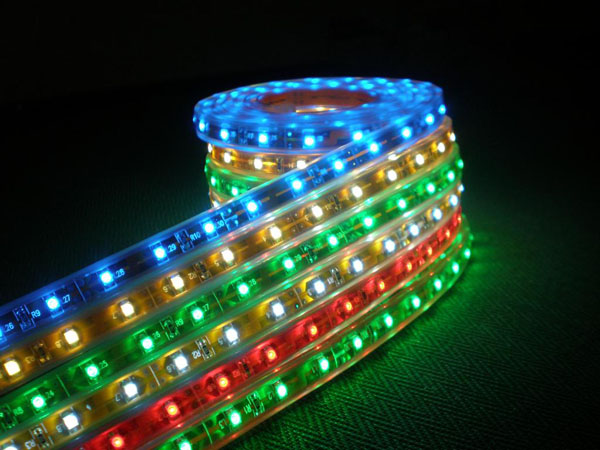
Team Viz works to interpret the data from the Sea Sense Team's outputs. They're creating a 3D-like projection screen that uses mist/fog (figure 1) to display what’s happening underwater or other relevant videos. The LED strips (figure 2) send information through a series of creative light designs and patterns. This visualization will entice people to get involved and try to make a difference themselves.
Viz Initiative Team Members:
- Carl Matheous Simpao
- Alamein Tabunda
- Darren Melon
- Loreto Frallon
- Jessebel Nemenzo
- Neil Villamil
Team TAPOK

Team TAPOK is a performing arts crew. Their goal is to inject a message of environmentalism and good uses of technology to the public by hosting a series of theatrical plays in Banilad and the surrounding community. Team TAPOK focuses on performing theatrical presentations to spread awareness of what is happening in our society today and how the humankind has greatly affected our only home, the earth, as well as providing necessary informations on how we could cope up with the damages that we humans have injected.
TAPOK Team memberS:
- Diane Young (Leader)
- Mary Joy
- Al Anth Siplon
- Japsy Grey
- Mellard Manogura
- The YATTA Performing Arts Group
Team FUPPI (Foundation University Precious Plastics Initiative)
This group is made up of faculty and students of Foundation University. Their project is based on an idea of Dave Hakkens. The group will make machines that shred and turn plastic into other objects. By showing the community the products these machines can make, they will give people another reason to collect their plastic bottles instead of throwing them away.

FUPPI Team Members:
- Clint Absin
- Christian Bungcasan
- Floramae Sioco
- Marlon Tanilon
- Jobert Kleine Koerkamp
- Cristina Calisang
- Arc Vincent Quisel
- Dexter Merced
- Razil Binondo
After much anticipation, Portal to an Alternative Reality was launched last night at the Arts Incubator program's Closing Ceremony and Reception at K11 art village.
Despite the rain, we had a strong turnout for the event. Joseph Zadrozny, U.S. Consul General in Wuhan, acted as Master of Ceremony.

Jamie Dragon (Public Affairs Officer at the U.S. Consulate) and I handed out awards to the teams.

Webcast star Lian Lian 连连 returned to webcast live on Douyu.com at the Portal to an Alternative Reality reception. She had an impressive 6,092 live viewers.

In his seminal short story from 1982 "Burning Chrome," William Gibson notably coined the term "cyberspace.” The concept was later popularized in his acclaimed debut novel, Neuromancer in 1984. I happened to be rereading Count Zero, the second entry of the Sprawl trilogy, Neuromancer being the first.
Another less written about concept that Gibson introduced in these books is the idea of sim-stem stars. Twenty years before anything like reality TV appeared, Gibson imagined people who would become famous by simply living their lives and broadcasting it. In Gibson’s world, the post-apocalyptic, the one-two combination of lowlife and high-tech shanties of the Sprawl, people don’t watch TV, they don’t even wear VR headsets. The sim-stem stars’ broadcast was wired directly into the audiences brainstem through a cybernetic port implanted just behind the ear, like a USB or SD card reader. Gibson uses the term “jacking in.”
Anyone can become a sim-stem, but having your eyes removed and replaced with a set of Zeiss Ikon implants, a combination of camera and live streaming device, is expensive. Thankfully Lian Lian is able to broadcast her life using a comparatively accessible and less intrusive bit of technology — a cell phone on a selfie stick.

Lian Lian's cell phone was just one of the many mobile devices in the room. Other attendees used their smart phones and tablets to view the community artist teams' augmented reality creations. In addition to plenty of iPads circulating within the crowd, we had a large plasma screen attached to an iPhone.

Here are some screen recordings of the teams' work:
Team 1, A Crow Drinking Water.
Team 2, Wuhan Dazhimen Railway Station.
Team 3, The Vanished Nanhu Airport.
Team 4, Through Gate.
Chinese social media is amazing and way different than what we're used to in the U.S. I am still getting a handle on it, but it feels like a great start to have 82 friends in Wuhan!

I still am utterly astounded that we managed to actually build the portal as planned, both its physical structure and its many virtual realities. It was a big idea which took the collaborative efforts of an entire city. Well, at least hundreds of people from across Wuhan - not exaggerating. I am very grateful and profoundly honored by everyone's hard work and commitment, and for welcoming me and the ZERO1 American Arts Incubator to the city. I will miss all of my new friends, but hope to return one day to this remarkable city. I shot this video of Kristy Shang and Bond Zhu on my last day at the K11 studio.