[et_pb_section fb_built="1" admin_label="section" _builder_version="3.19.6" custom_margin="0px||" custom_padding="0px||"][et_pb_row admin_label="row" _builder_version="3.19.6" background_size="initial" background_position="top_left" background_repeat="repeat" custom_margin="||" custom_padding="||"][et_pb_column type="4_4" _builder_version="3.0.47" parallax="off" parallax_method="on"][et_pb_text admin_label="Text" _builder_version="3.0.74" background_size="initial" background_position="top_left" background_repeat="repeat"]
We have awarded the third round of the American Arts Incubator “small grants” to local Lao artists and organizations. The public presentation of the projects was hosted by i:cat Gallery and was attended by over thirty local artists, leaders, and curious members of the community. I unveiled the mural design created during the workshop that had been submitted to the Laos Government for approval. Just at that moment, Matthew Ference, the Public Affairs Officer at the U.S. Embassy announced he had received an email from the Laos government approving the mural project. The room erupted in cheers and smiles.
The first small grant was awarded to the Khao Niew Lao ("Sticky Rice") Theater Group. Insisiengmai Lattanakone (Toh), is the director of this Lao performance group that uses found materials to create beautiful puppets and props. Toh will create three puppets for a performance that promotes reusing and recycling plastic waste. Each puppet will be constructed of recycled plastic purchased from the local collectors who walk around the city and pick up the trash. The puppets will be a visual representation of the amount of plastic waste produced by the average household in Laos in one day, one week, and one month. Toh also will travel to a children’s center outside the city to hold a workshop on the importance of reusing and recycling plastic. The young workshop participants will create small sculptures out of plastic that they collect around the neighborhood; the work they produce will be installed at the public exhibition as part of his performance. By empowering youth to learn sustainability through art-making and collaboration, this project hopes to begin a new tradition of innovative environmental health practices that is interactive and fun. The concept for this project will serve as the foundation for a larger performance at the international puppet fair held next January in Vientiane.

The second grant was awarded to Bounpaul Phothyzan, a professor at the National Institute of Fine Arts. Bounpaul will produce a large-scale public installation titled “Plastic City” that will be made out of trash and discarded materials. The structure for the installation symbolizes the wave of new architecture being rapidly constructed around the city. This obsession with the “new” here in Laos is part of what causes people to think only about short-term benefits of development, or the convenience of plastic. He will collaborate with students from the National Institute of Fine Arts to construct his project. The work will be temporarily installed for the public exhibition where it will become one of the first contemporary public art installations in the country. The vision is to find a permanent home to install the piece after the exhibition.

The third grant will go to Green Vientiane, a local organization that works to keep the city of Vientiane beautiful by promoting healthy recycling habits and encouraging local communities to reduce waste. Only about 40% of waste in Laos ends up in landfills or gets recycled. The remaining garbage gets burned, thrown on the ground, or dumped into the Mekong River. Trash collectors push primitive carts around the city and collect plastic and other materials that can be sold to the recycling center. These people are virtually invisible as they move through the city and clean up the trash. Green Vientiane’s project is titled, “Make My Cart Beautiful,” which will pair local artists with cart pushers to design and paint their carts. The artists will customize their design to interests of each cart pusher. The newly painted carts will help make the work that these people do every day more visible. The long-term vision is to start an “adopt a cart” program where local businesses, schools and organizations can sponsor the beautification of a cart.

The final grant was awarded to the newly-established mural collective, Color of Future, made up of twenty professors and students from the National Institute of Laos Fine Arts. Two professors shared their experiences during the workshop and talked about their vision to take the knowledge that they will acquire this month and share with their students to launch future projects. The next two weeks will be their research phase as they continue to learn each step of creating a large-scale mural with me. After this project, they plan to create a mural to be painted on the front of the new campus being built at the National Institute of Fine Arts. They will engage the students in the process, and teach them the skills they have learned from the workshop. Eventually they would like the students to design and paint their own murals as part of a new permanent curriculum at the school.

[/et_pb_text][/et_pb_column][/et_pb_row][/et_pb_section]
[et_pb_section fb_built="1" admin_label="section" _builder_version="3.19.6" custom_margin="0px||" custom_padding="0px||"][et_pb_row admin_label="row" _builder_version="3.0.48" background_size="initial" background_position="top_left" background_repeat="repeat"][et_pb_column type="4_4" _builder_version="3.0.47" parallax="off" parallax_method="on"][et_pb_text admin_label="Text" _builder_version="3.0.74" background_size="initial" background_position="top_left" background_repeat="repeat"]
I arrived in Laos with three rules for myself; stay open, ask questions, and listen.
Once people started talking, the same issue kept coming up: the accumulation of trash around the city. Laos is a developing country that is in the throes of robust economic and urban development. The growth in and around the city is outpacing the existing infrastructure to manage the amount of waste being produced on a daily basis.
The city produces at least 637 tons of waste per day on average. Only 250 tons of waste is recycled or taken to landfill, according to the United Nations Environment Programme. This leaves almost 400 tons of waste per day that either ends up being burned or tossed in the streets, canals and rivers. Mass amounts of plastic only started being used in Laos about twenty years ago, so it is a relatively new product in terms of widespread use. Traditionally, food items were wrapped in banana leaves and other organic materials. These items could be thrown on the ground and they would decompose or used in fires without any environmental consequences. Today, the banana leaves have been replaced by plastic bags and bottles; they are discarded without regard to where they will end up, and burnt without considering the impact of the air. That toxic scent of melting plastic is common around the city.

There are trash collectors who push wooden or metal carts around the city, collect plastic and other recyclables, and bring them to a local recycling center in exchange for money. The price for plastic, however, is directly impacted by the price of oil. In the US, we celebrate when gas prices drop. In Laos when the price of oil drops, the demand for recycled plastic also drops because it is just as cheap to purchase new plastic. The trash collectors end up receiving less money for the plastic that they collect and have less incentive to gather it.
The work ahead of us all -- as artists, students, teachers and youths -- presents a grand responsibility and vital opportunity to use public arts as a way to help influence public practices regarding environmental health. As we continue the collaborative process of mural-making to educate neighborhoods about practices like recycling, each community can work together to build a better environment for the future.
[/et_pb_text][/et_pb_column][/et_pb_row][/et_pb_section]
I have been in Vientiane for seven days. These days were packed with workshops and meetings with Lao artists, and youth and environmental groups where we made art, shared our dreams, and discussed ways to improve the environment.

This city is virtually devoid of public art.
The few murals that do exist are either propaganda for the Lao PDR Government or small murals painted by foreigners who work with a private business. In Oakland where I live, we are in the midst of a street art renaissance where new murals are popping up almost on a weekly basis. It’s a beautiful thing. Here in Laos, there is virtually nothing. The idea of creating a painting to be displayed in public outside of a gallery or museum is hard for local artists to fathom. Established artists use assistants as cheap labor here all of the time, but the act of artists working collaboratively to produce an artwork that honors the voices and skills of each artist is also very new.
Twenty professors and students from the National Institute of Fine Arts showed up for the workshops each day this week, during which I walked them through each step of creating a collaborative mural. Under my guidance, this group created the concept, developed sketches, and produced a fully realized design in only three days! They will spend the next two weeks painting the mural together on a public wall in the middle of the city.

During the workshop, we discussed the environment and the issues that most concerned the Lao people. The artists started by creating their own individual drawings that illustrated the issue that resonated with them the most. We placed the drawings on the wall and began to talk about the similarities between the images and the ideas. The accumulation of trash and plastic around the city was recurring theme in many of the drawings. Some of the artists illustrated the problem of people dumping trash into the river while others offered solutions with images of people picking up trash and planting trees. A few artists dreamed about what the future might look like if everyone worked together to help change the habits of the people and make the environment more of a priority. This became our concept for the mural: identify the problem, illustrate the solutions, and show the dream for the future. We had our idea.

The artists broke into teams to create the scenes of the mural. In less than eight hours over two days the artists worked together to create a ten-foot full color sketch of what the mural would look like – keeping in mind that Lao artists do not normally collaborate together like this. The teaching and the art practice here is very formal and traditional. All artists are gifted in the technical aspects of drawing and design, but are not encouraged to expand beyond traditional formats.
The energy and excitement increased with each day as they worked toward finishing the design. It was like watching a dance where one artist would begin drawing a figure, another would step in and add the detail, and another would twirl in to add the splashes color.

On the final day, the artists at the workshop formed a mural collective with the vision to start a mural program at National Institute of Laos Fine Arts. We brainstormed names and had a logo design contest to vote on our favorite ideas. The mural collective, “Color of Future,” was born. By venturing into uncharted public arts strategies and breaking from traditional arts practices, this collaborative group of Lao youth and professors will soon unveil a creative resolution to raising awareness about environmental issues and plastics to carry outwards to their communities, elders, and future generations. They will spend the next two weeks painting the mural on a public wall in the middle of the city.

David Burke is off to a quick start in Vientiane, Laos! He launched the program with an artist talk at i:cat gallery yesterday, where he discussed how murals as a public art form can engage community members in dialogue and spark greater awareness around a social issue. Spanning fields of design, architecture, science, and engineering, the workshops held this week will delve into discussions and activities that aim to identify specific ways the participants can collaborate on various public art concepts to address relevant environmental health issues, like rivers contaminated with trash, deforestation, and one-time use of plastics.
On Friday, community groups will present their public art proposals to a panel of community leaders from the arts, environment, and other public sectors. The panelists will ask questions, make suggestions, and provide feedback to the groups, and four projects will be selected to receive small grants to make their proposals come to life!
That's when the real fun starts. David will facilitate each group's conceptual development, design, and implementation. The young artists (and "non-artists" who will discover they are artists) will race to complete their concepts over the next two weeks, and then along with David's own mural project, will present the projects to the public at a special exhibition event tentatively scheduled for June 10.
--
In the meantime, make sure you are plugged in to the on-the-go action by visiting and liking the Laos Arts Incubator Facebook Page!
The intensity of the heat engulfed me as I stepped out of the plane and onto the tarmac at Wattay International Airport in Vientiane. It was both arresting and comforting, reminding me of the hot summer days during my last trip to Laos almost four years ago. After spending the night under the bright lights and bustling atmosphere at the Bangkok airport, Vientiane was sleepy and quiet by comparison. My large boxes of paint and supplies were waiting for me inside the airport and I was relieved to be waived through customs with nothing more than a nod. After months of preparation and anticipation, I had finally arrived.

On my first night here I had the chance to attend an exhibition of young Lao artists who are breaking out of the traditional Lao art practices.
It is easy to forget how fortunate we are to have the freedom to express ourselves creatively in the US. That freedom does not exist in the same way here in Laos as there are very rigid parameters for what contemporary art should look like. It was only my first night, but already I could feel the energy around the younger artists eager to push contemporary art in Laos into new territory. It was exciting and encouraging to meet these artists.

That night, I was awoken by the drums from the neighboring temple. The drumbeats were soft and persistent, a subtle reminder of rich history and religious traditions that are such an important part of Laos culture.

Tomorrow night we officially kick off the Laos Arts Incubator project with an artist talk and lecture titled: Public Art and the Collective Conscience.
It will be a chance for interested artists and groups to learn more about the project, ask questions, and hopefully be inspired enough to return for the workshops during the rest of the week. So excited to finally be here! More to come...
[et_pb_section fb_built="1" admin_label="section" _builder_version="3.0.47" custom_padding="0|0px|29.4844px|0px|false|false"][et_pb_row custom_padding="0|0px|14.7344px|0px|false|false" admin_label="row" _builder_version="3.0.48" background_size="initial" background_position="top_left" background_repeat="repeat"][et_pb_column type="4_4" _builder_version="3.0.47" parallax="off" parallax_method="on"][et_pb_text admin_label="Text" _builder_version="3.19.6" background_size="initial" background_position="top_left" background_repeat="repeat"]
Today is my last day in the Philippines. A few hours ago I landed in Manila, after waiting for over an hour while the Presidential airplane was landing at the Bacolod airport. I was already installed in my airplane seat, all buckled-up, and through the tiny
After all the anticipation, President Benigno Noynoy Aquino III was descending from his airplane and everyone around -even inside my airplane- suddenly stood up while a small marching band played quietly the national anthem in the background. This moment was perhaps the best closure for my time in Bacolod, also the moment when I finally understood something essential about Filipino culture: This is a place bound together by very strong community values. A strong sense of togetherness, a shared identity, and most importantly, an admirable resilience to an adverse history (colonialism, natural disasters, inequality) rule this country. I couldn’t be luckier for the opportunity to work in such an energizing context like Bacolod City, where art and community engagement come hand-in-hand.
Shortly after I landed in Manila, I had a three-hour taxi ride through the city’s heavy traffic, even though I was traveling only 7 miles. I was heading to Green Papaya Projects, a well established independent art space that has been active for over a decade and run by amazing people (Pewee and Merv). They had invited me to give an informal presentation about my recent work in Bacolod and “The People’s Island” project. You can imagine, I was both excited to share the experience and very fresh documentation but also quite nervous since it was only five days after the public launching of the project and I was still processing the intense experience...
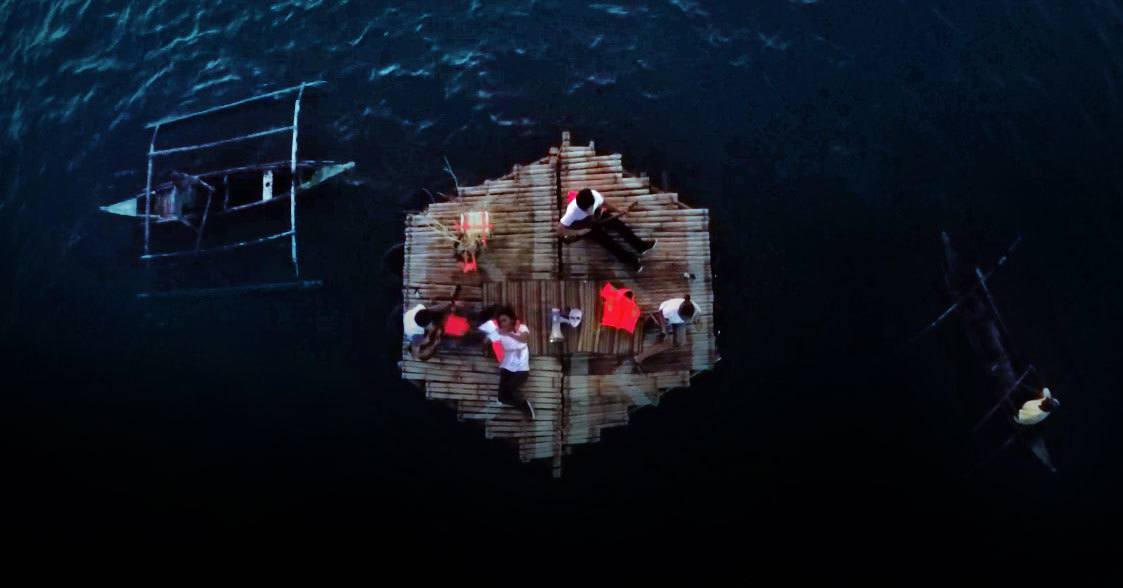
So, after a public lecture at the Negros Museum addressing the role of Public Art in fostering community participation and healthy environments; a five-day workshop exploring collaboration; sustainable urban planning and socially engaged art, I invited participants to creatively explore their city as an extension of the endangered natural world. This is how The People’s Island became a thinking tool, a collective dream and an immersive artistic experience that engaged around 150 people through a public event and exhibition.
Framed as a large participatory art project, The People’s Island really took place in the public sphere of Bacolod: in urban spaces, natural sites and even in our collective consciousness. The project evolved slowly during three weeks of intense work, conversations
Thus, on April 25th at
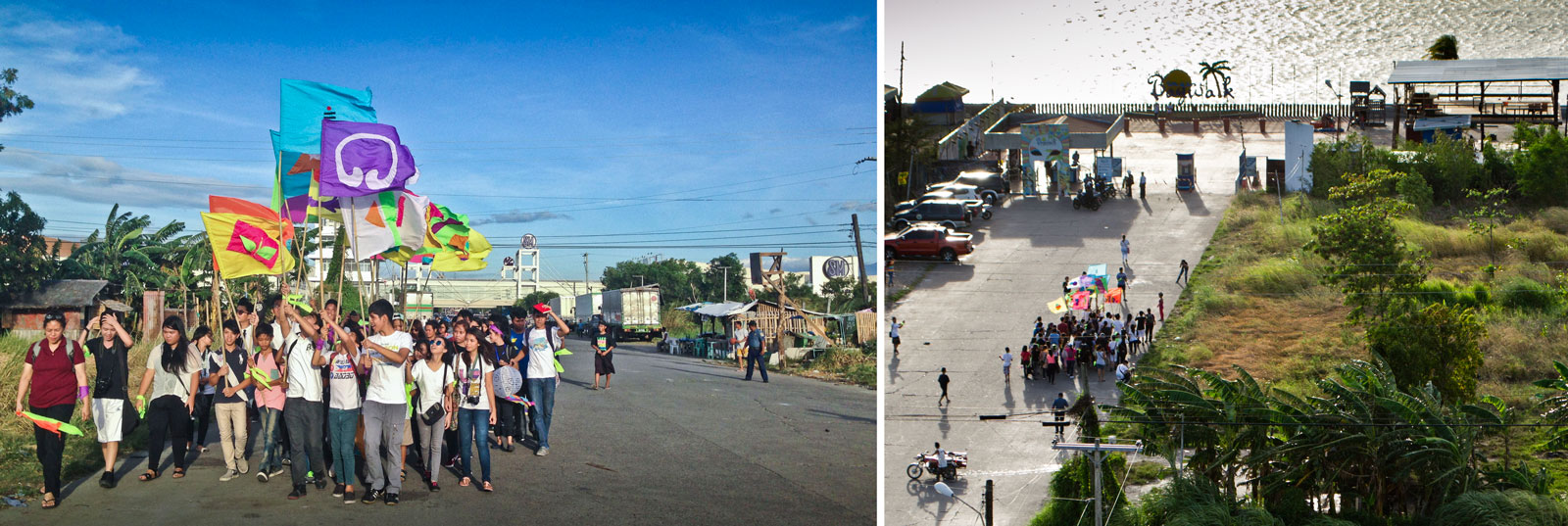
Once the public arrived
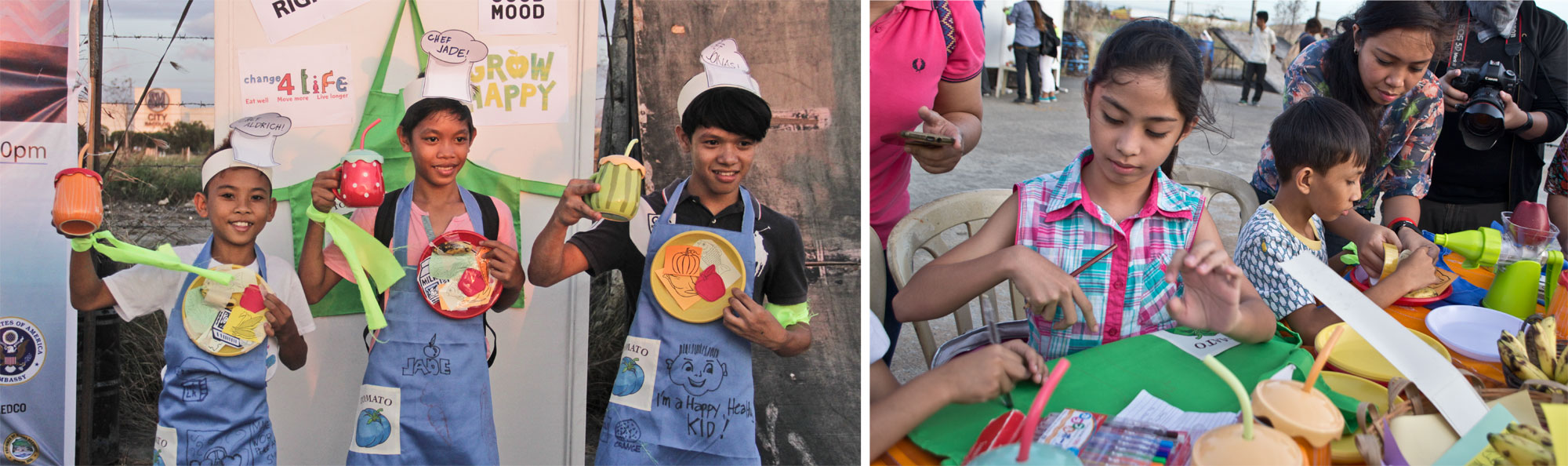
Around
Around
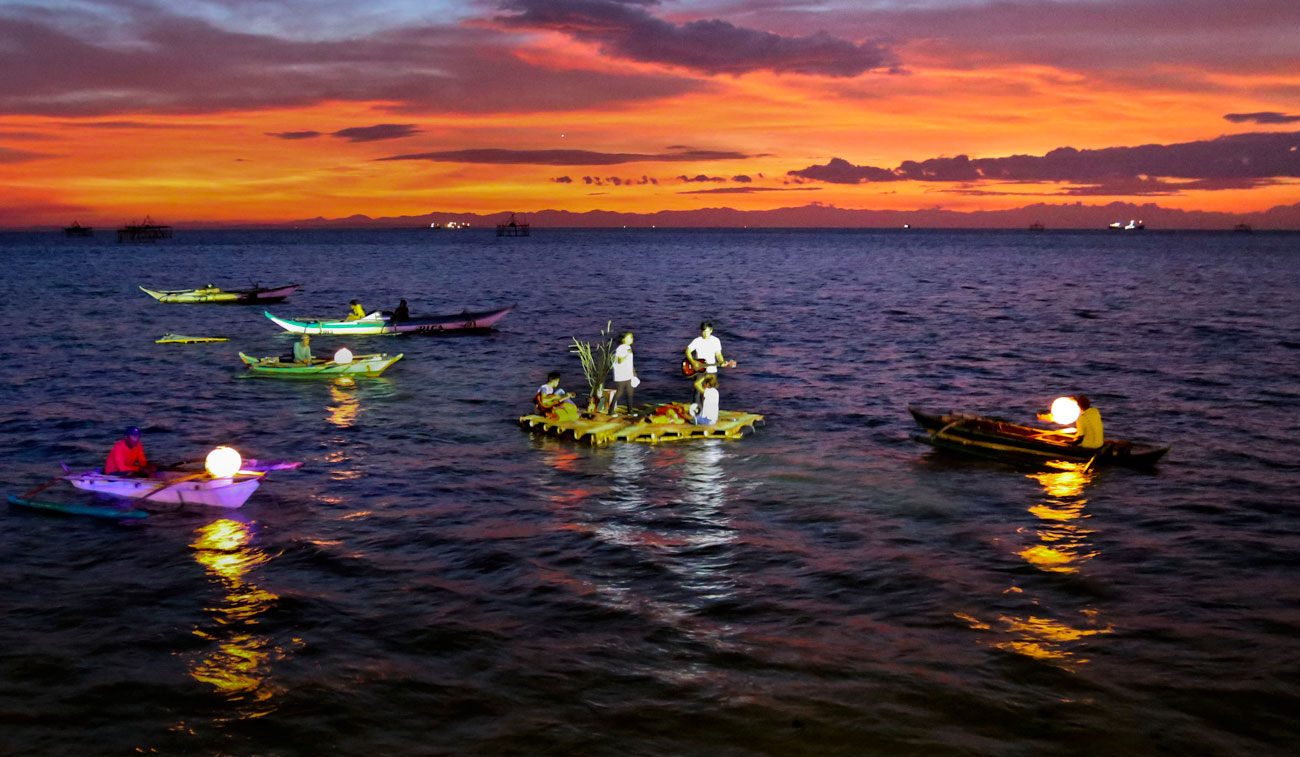
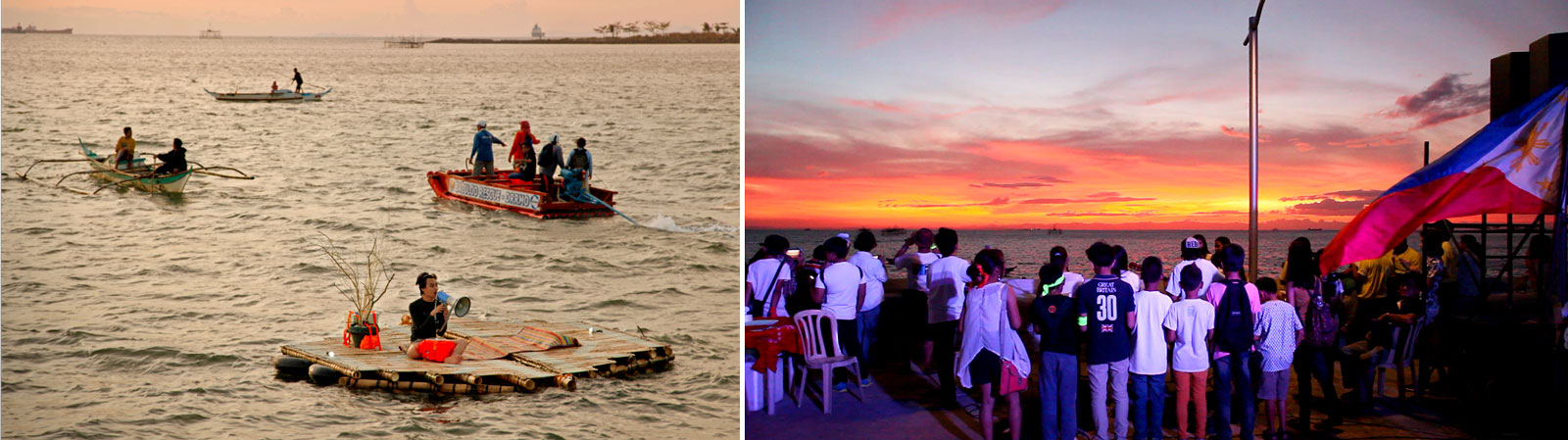
Around
*Its next destination will be Suyac Island in the Northern part of the Negros region, where the structure will re-emerge as the Floating Eco-Resource Center and Library.
[/et_pb_text][/et_pb_column][/et_pb_row][/et_pb_section]
ZERO1 is calling innovative new media and digital artists with a love of travel and passion for community-driven art to apply to participate in the second round of the American Arts Incubator.
American Arts Incubator is an international arts exchange program developed in partnership with the U.S. Department of State’s Bureau of Educational and Cultural Affairs (ECA). The program sends artists abroad to collaborate with youth and underserved populations on community-based new media projects that bolster local economies, address a local social issue, and further social innovation. Artists will be working directly with ZERO1, U.S. embassy officials, and overseas partners to realize a series of public art projects that cultivate individual and community engagement and citizenship internationally.
While the first round of artists are in the midst of their exchanges, we are excited to start looking forward to the next round of artist applicants. Participating overseas locations for the second round are: China, Indonesia, Philippines, and Vietnam. One artist will be selected for each location and will be responsible for creating a public art project plus overseeing a unique "small grants" program to facilitate community-driven art in that location. The deadline to apply is May 31, 2015 by 11:59pm PST.
Learn more about criteria and application requirements here > >
[et_pb_section fb_built="1" admin_label="section" _builder_version="3.0.47" custom_padding="0|0px|29.4844px|0px|false|false"][et_pb_row admin_label="row" _builder_version="3.0.48" background_size="initial" background_position="top_left" background_repeat="repeat"][et_pb_column type="4_4" _builder_version="3.0.47" parallax="off" parallax_method="on"][et_pb_text admin_label="Text" _builder_version="3.19.6" background_size="initial" background_position="top_left" background_repeat="repeat"]
It’s a hot Saturday afternoon and I feel my voice resonate strongly inside my chest while my hearing still recovers from the pressurized cabin of the airplane. I can even hear an echo leaking through the century-old walls of the Negros Museum in Bacolod… Well, the fact is that I’m
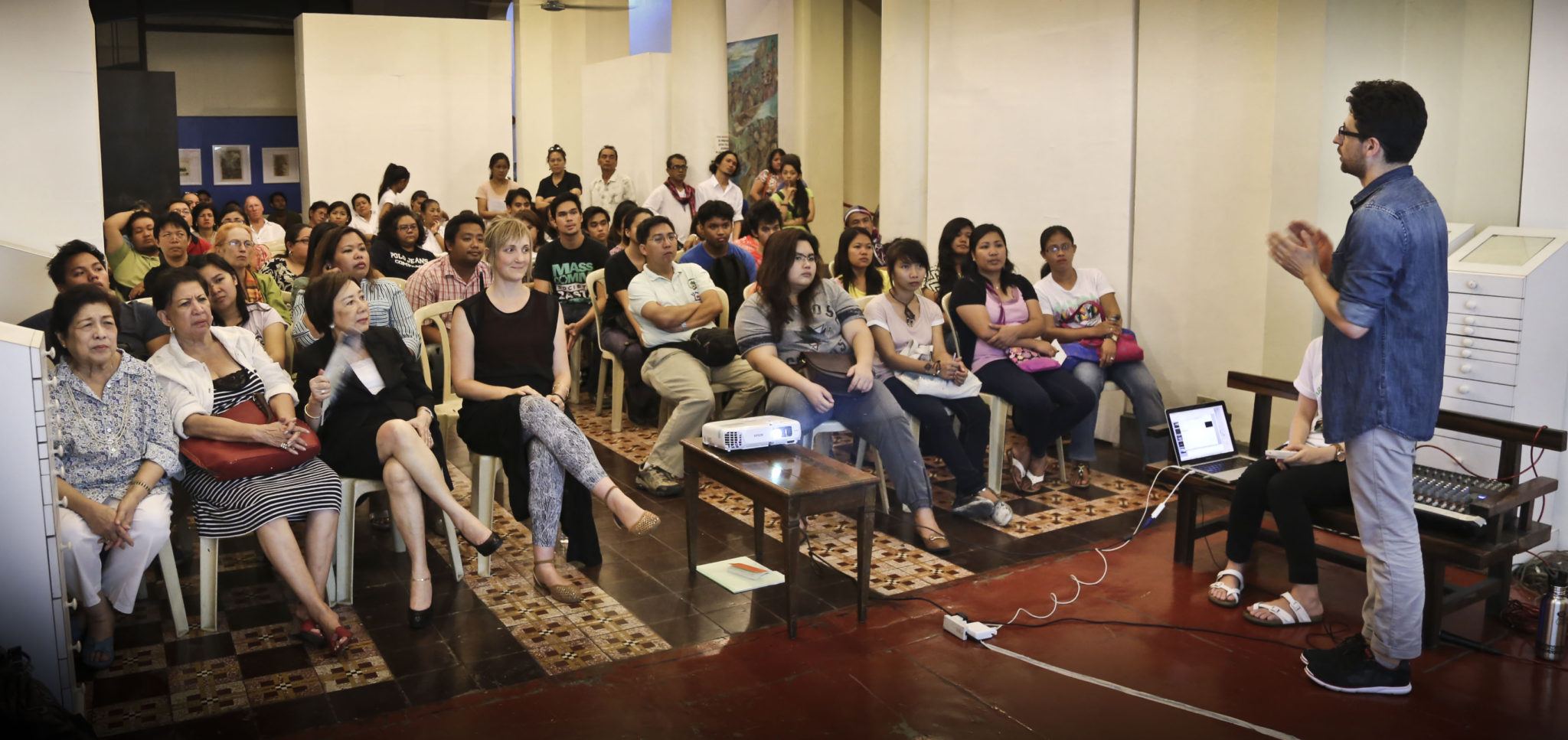
This was just our third day in the city and my brain was already full of ideas, questions, and yes, lots and LOTS of new names to remember. Just the night before, I gave a public lecture in the same room, which created a lot of curiosity among local artists, environmentalists
During the same talk, I introduced the public art project that I will develop in Bacolod titled, The People’s Island, which revolves around the idea that “reality is none other but the things we do together.” On the one hand, The People’s Island is a metaphorical site, or perhaps a thinking tool that allows workshop participants to create a fictional place that responds to their visions of what their ideal city or environment could look like. Throughout the workshops, participants gathered their concerns about environmental health and re-enacted them through quick, stop-motion animations. They then designed 3D scaled models of a fictive city, as a means to propose sustainable urban planning. This was achieved by transforming small paper sculptures into plans for hybrid objects that use clean energy and have a public function—from street planters that collect solar energy and emit light at night that replace expensive street lighting, to wind banks and a floating, self-sufficient restaurant and garden! All these ideas are slowly shaping a collective vision of a city-environment that local residents deserve, all found inside their own creative power. This is how The People’s Island emerges within us—the public.
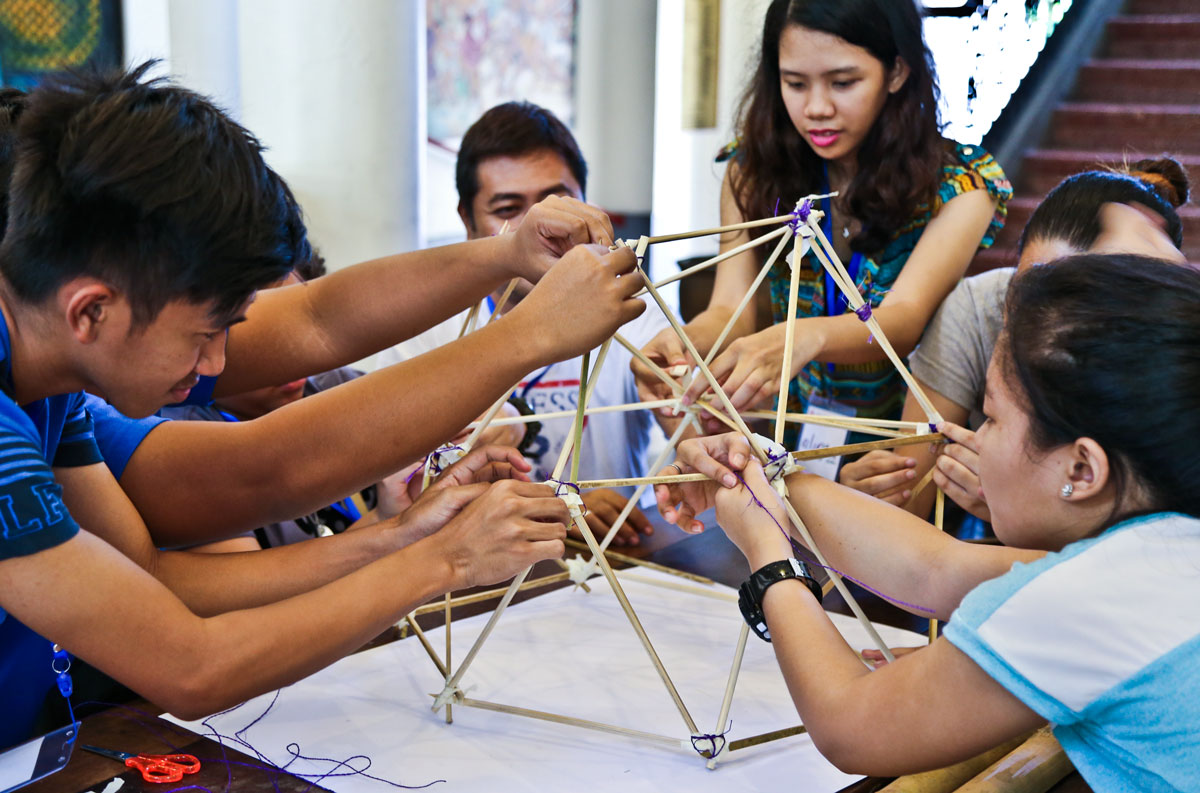
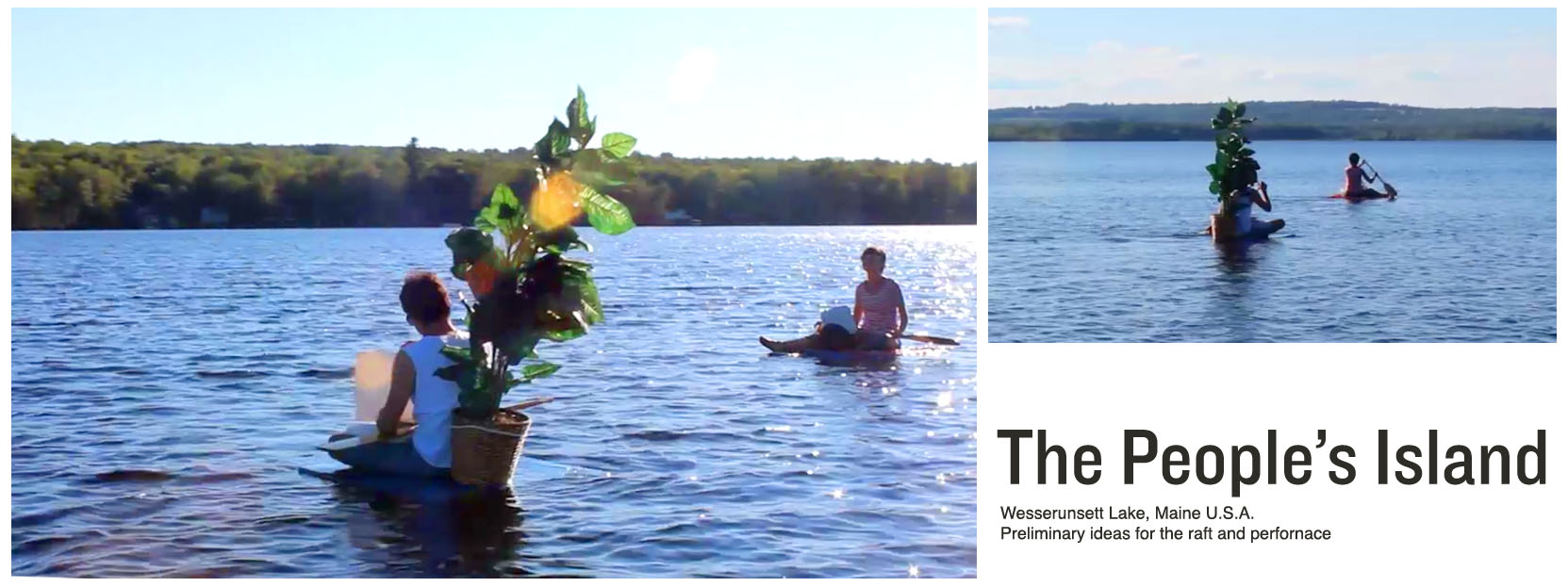
On the other hand, this project is a very tangible effort and has slowly moved from the realm of fiction to reality. Yes, that means that we’re making an island! Slowly but surely, The People’s Island is becoming a small floating platform composed of a series of rafts joined together (approx. dimensions 10ft x 10ft) made with indigenous materials like bamboo. The principle of The People's Island is to emerge as a temporary land-mass generated by people (literally) gathered together in a specific site, on firm land
In the past week, workshop participants worked collaboratively in shaping this new, fluid "land." Through fun, hands-on art
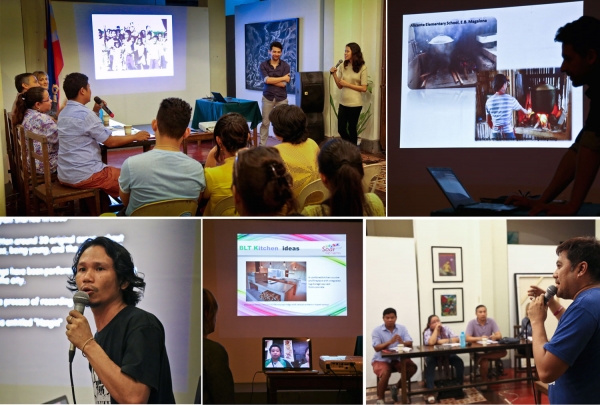
The first of these grants went to Katherine Maguad and Jeffrey Lazaro, who plan to utilize the knowledge and skills from local ceramic artists to create more hygienic stoves and efficient kitchen facilities. These sculptures/prototypes will be used in remote rural areas lacking from running water and electricity, and where children suffer malnutrition and health problems due to food contamination.
The second grant went to Aliana
The third grant went to Edmund Bacia and Peter Fantinalgo from the art collective, Binhi. Their idea is to produce a short video documentary around a song called “Hangin” (in English: Air), which was composed by Dina, a young artist from the underserved community of Banago. Dina passed away last year due to
And finally, the fourth grant was awarded to BALAYAN Organization, a group of environmentalists from La Salle University. Their plan is to use participatory art and experimental pedagogy to increasing community resilience to disasters in areas neighboring the ocean, which are the most vulnerable during the typhoon season.
As I write this, I prepare myself for a super busy but exciting week. We plan to celebrate Earth Day with a pre-launching of The People’s Island in the artificial lagoon in front of the local government building. Day after day, we encounter many challenges but also find creative solutions to keep the energy going, because
[/et_pb_text][/et_pb_column][/et_pb_row][/et_pb_section]
[et_pb_section fb_built="1" admin_label="section" _builder_version="3.19.6" custom_margin="0px||" custom_padding="0px||"][et_pb_row admin_label="row" _builder_version="3.0.48" background_size="initial" background_position="top_left" background_repeat="repeat"][et_pb_column type="4_4" _builder_version="3.0.47" parallax="off" parallax_method="on"][et_pb_text admin_label="Text" _builder_version="3.0.74" background_size="initial" background_position="top_left" background_repeat="repeat"]
Note: ZERO1 invited each of their partners to share their exchange experiences by contributing to our blog. This is a message to ZERO1 from Diane Kambanei, Executive Director of YWCA PNG. Her letter captures her organization's experience partnering with ZERO1's American Arts Incubator and the local U.S. Embassy.
---
The YWCA PNG were privileged to engage in a partnership with the American Arts Incubator in March of this year. The engagement was facilitated by our Young Women’s Coordinator, Naomi Woyengu. It all began at the National Women’s Forum. This meeting was one of chance and divine occasion. The YWCA had been discussing for a while how to incorporate the Arts to advocate for gender equity issues! We had thrown around ideas for a couple of months and this meeting with Kate and Kendal aligned with what we had been discussing.
Naomi eagerly introduced me to Kate and Kendal, and there was an instant connection. The purpose and vision of the American Arts Incubator was precisely what we had discussed. Soon after the Forum, young people representing the Youth and Adolescence Heath (YAH) Club, Youth Against Corruption (YAKA), and the YWCA PNG gathered at the national office for a presentation by Kendal and Kate. To our surprise, the projects Kendal presented were unlike what the young people and the YWCA had envisioned as art, and how art could relay a message or theme. These art projects depicted through the presentation were creative, peculiar, and unique - and they certainly were not the traditional sculptures installed around our city. This presentation birthed much inspiration!

From this moment and throughout the weeks to follow, I watched the young people share ideas with one another and take ownership of this project. The YWCA aim was to empower the young people from different organisations so that they may advocate for issues that they felt should be addressed in our country. The young people chose to address gender equity and youth empowerment (specifically gender-based violence and teenage pregnancy) through two distinct projects. The objectives of creating a safe space and allowing young people to advocate for social issues was achieved through both. Young people came alive in their creativy as they constructed these projects. The program pushed them to think outside the box. Instead of utilising traditional means to advocate for issues, they experienced how collaborative art displayed in a public place could engage the broader public and other young people in the cause.
The YWCA has a young women’s program called Rise Up! that is focused on empowering women, ages 15-30 years old in rural PNG. Human rights, women’s rights, leadership, gender-based violence, public speaking and sexual reproductive health rights are a few of the key issues. Now, after experiencing an enriching partnership with American Arts Incubator, we are planning to use a similar delivery of collaborative art in public spaces with the Rise Up! program. We look forward to having the young women who will go through the Rise Up! training conceptualise public artworks that will address issues they face in the villages.
This experience has been life-changing for all involved. Learning how to express creativity through art whilst advocating for social issues is powerful. I’d like to thank the American Arts Incubator and ZERO1 for choosing a partnership with the YWCA of PNG.
[/et_pb_text][/et_pb_column][/et_pb_row][/et_pb_section]
The American Arts Incubator is marking the launch of its second exchange as artist Felipe Castelblanco arrives in the Philippines. Felipe's workshop and public art projects are intended to create dialogue around the environmental conditions in Bacolod, a city that relies on its ocean health to support its communities. The coastlines and correlated ecosystems are impacted each time a natural disaster like Typhoon Yolanda strikes.
On Friday, April 10th from 6-7pm, Felipe will give an artist talk titled, "Making [Space] Public: The Role of Art in a Sustainable Future," at the Negros Museum of Art. This event kicks off a workshop series wherein Felipe will work with youth and local artists to realize a series of public art projects deeply connected to the health and creative utilization of surrounding environments.
Participants will be invited to infuse their creative works into the city of Bacolod. Spanning art, architecture, design, ecology and economics, Felipe and the Philippines Arts Incubator have much in store as they embark on plans to create The People's Island, a floating platform that will host artworks and performances that will be visible from Bacolod's waterfront by a diverse local audience.
To view more information on Felipe's art talk and workshop, view the complete flyer here.
Be sure to stay afloat with the updates on the Philippines Arts Incubator facebook page!
Note from ZERO1: Kendal has been hard at work overseeing the American Arts Incubator, which has already awarded small grants to four groups creating public art projects centered on the issue of women's empowerment. Here are some of the updates from Kendal that were posted to the community-focused Facebook page.
As the Papua New Guinea Arts Incubator inched closer to exhibition day, each group was abuzz with prototyping and production parties! Seeing the Youth Adolescent Health (YAH) Club and Melanesian Institute of Arts & Communication (MIAC) students of the University of Papua New Guinea constructing their projects in the same space has been fantastic. Kendal and Kate float amongst the groups to observe, ask questions, and lend a helping hand. It previously was rare for these two social groups to intermingle, yet now we have heard multiple conversations about how the groups could overlap for future community efforts. Yes to collaboration... incubator style!

After the four artist groups were selected, the Incubation began. Each group leader drafted plans and their respective groups contributed ideas and feedback to further the concept, design, and number crunching.

From materials selection and construction, to design and decoration, the hard work of each community project is taking shape. The groups have just one week to prepare before presenting the first phase to the public!

The creation of each project harvested deeper connections with a three-pronged focus of confidence, empowerment, and commemoration. These common themes emerged as the artists exchanged ideas amongst the four groups.

We've been full steam ahead this week, and the community artists are eager to work through the weekend. It is wonderfully inspiring to see these young people who initially were so shy and quiet come alive in the art-making process. The space is tingling with determined focus and excitement, each artist adding a personal touch to the collective creations.
And a bonus image below... Port Moresby is a mid-sized city of roughly 350,000 people, but word travels fast and we are recognized and warmly welcomed wherever we go.

And last but not least, here's a sneak peak of Kendal's personal multimedia project. He and Philemon Yalamu, a Digital & Media Arts faculty member for the MIAC program at UPNG, are in their element as they co-develop the prototypes for a virtual experience that educates and motivates the young people of PNG.

--We look forward to the final reveal as the Papua New Guinea Arts Incubator finalizes their interactive community art projects. To view more photos, remember to visit
the Papua New Guinea Arts Incubator page!
[et_pb_section fb_built="1" admin_label="section" _builder_version="3.19.6" custom_padding="0px||" custom_margin="0px||"][et_pb_row admin_label="row" _builder_version="3.0.48" background_size="initial" background_position="top_left" background_repeat="repeat"][et_pb_column type="4_4" _builder_version="3.0.47" parallax="off" parallax_method="on"][et_pb_text admin_label="Text" _builder_version="3.0.74" background_size="initial" background_position="top_left" background_repeat="repeat"]
The first round of American Arts Incubator “small grants” has been awarded! More than fifty community members in Papua New Guinea came out to participate in the public presentation of project ideas, which was hosted by the YWCA Port Moresby. Four creative and courageous Port Moresby teams presented public art concepts addressing women's empowerment, which had been developed during a week-long workshop led by American Arts Incubator visiting artist, Kendal Henry.
The following projects will be developed over the next few weeks, and then unveiled during a public ceremony. You can read more about the exchange here.
ELYOK Products, a women's collective of traditional artisans crafting bilum (the unique woven bags indigenous to PNG) will create a project that connects local women bilum-makers to the market demand that exists both locally and internationally.
Melanesian Institute of Arts & Communication (MIAC) at the University of Papua New Guinea intends to develop interactive installations in well-traversed areas on campus that combine functional sculpture, sound, and social media. Each installation will serve as a gathering spot as well as a tribute to a successful female UPNG graduate.
Youth Adolescent Health (YAH) Club, a group advocating for health and social issues affecting teens and young adults in PNG, has proposed a project tentatively titled Confidence-Builder Outfit Booth (C-BOB) where young people in a busy mall will be invited to choose custom-designed articles of clothing intending to instigate dialogue around building confidence. Photography and social media will extend the conversation to the virtual world.
YU YET Center is a holistic approach to community engagement and healing for youth, using traditional and contemporary art, yoga, dance, music, and theater in the Paga Hill neighborhood.

Thank you to the brave presenters: Allan Mogerema (YU YET Center); Albert Joseph (UPNG); David Rupa, Faith Kila, Kay Ila, & Janelle Kila (Youth Adolescent Health Club); and Emmanuel Kaitas (ELYOK Products).
And we’d like to extend a special thank you to our selection committee: Beatrice Mahuru (CEO Digicel PNG Foundation), Dulciana Somare-Brash (Deputy Executive Director of Pacific Institute of Public Policy), Hamish George (Director Port Moresby Theatre), Ed Soltow (U.S. Embassy Port Moresby Public Affairs Officer), and Carlos Williams (U.S. Health Attaché of Pacific Islands).
[/et_pb_text][/et_pb_column][/et_pb_row][/et_pb_section]
[et_pb_section fb_built="1" admin_label="section" _builder_version="3.19.6" custom_margin="0px||" custom_padding="0px||"][et_pb_row admin_label="row" _builder_version="3.0.48" background_size="initial" background_position="top_left" background_repeat="repeat"][et_pb_column type="4_4" _builder_version="3.0.47" parallax="off" parallax_method="on"][et_pb_text admin_label="Text" _builder_version="3.0.74" background_size="initial" background_position="top_left" background_repeat="repeat"]
The first workshop at the YWCA was with young members of the Youth Adolescent Health (YAH) Club and Youth Against Corruption Association (YACA). Both groups formed their own governing bodies through a democratic process and are very active in discussing concerns around HIV/AIDS, violence, and other social issues that plague PNG youth. So, it was very surprising that when I asked the members around the room what they would like to address through a public artwork: litter, religious restrictions/rules, and societal expectations were the first things to come up. When pressed as to why they did not mention the very issues they have been advocating for, they revealed that these topics were very culturally sensitive particularly in a public dialogue setting and it would be difficult to broach. I suggested that we step up to the plate and think creatively to find ways to figure out how to address the sensitive issues in ways that are palatable to the public because it’s so important to their development. There was consensus.

In an effort to focus our energies on topics to address in an artwork the group selected three problems – Youth Empowerment, Gender-based Violence, and Teen Pregnancy. They were first asked what made them feel powerful, why do teens get pregnant, why are men violent against women, and why do women accept that violence as the norm. Not surprisingly, it all came down to confidence or lack thereof. Confidence gives one power and a secure sense of self. It takes confidence to say no to boys who are pressuring to have sex when you don't, just as it takes confidence to ask for condoms even though it is embarrassing. It also takes confidence to know that an abusive relationship is not healthy, and confidence to get out of it. The group realized that no matter what the issue, confidence empowers. It was decided that the YWCA artworks would be about teaching, showing, and celebrating confidence as a form of empowerment.

[/et_pb_text][/et_pb_column][/et_pb_row][/et_pb_section]
The visions and plans for the American Arts Incubator are becoming reality! Kendal and I have arrived in Papua New Guinea!
After spending the better part of 18 months working alongside my colleagues at ZERO1 and with the U.S. State Department teams in Washington, D.C. and Port Moresby, we are absolutely thrilled to arrive to this beautiful place halfway around the globe to start the true work.
Amidst intermittent power outages and torrential rains blowing sideways, a crowd of over 300 faces gather in the Crowne Plaza ballroom in Port Moresby for the 2nd Annual Papua New Guinea Women’s Forum. The event examines seemingly every major social issue as it relates to gender equality – international policy, health, education, gender-based violence and sex crimes, workers’ rights, financial inclusion, family planning… The list is daunting, and as an ignorant outsider, beyond overwhelming. A tug on one thread triggers a domino effect of complicated knots. There exists some level of reassurance, though, in realizing this Forum is not just about talking; each discussion leads to a breakout session, wherein interested attendees collaborate to develop action items. Underlying these informal, real-world strategies is the notion that continuous small steps lead to sustained transformation.
Attendees’ expressions range from wide-eyed eagerness to ultra-hesitant shyness, from anger and grief to optimistic hope. Local, regional, and international representatives of NGOs like UNICEF are here. The principal of a high school on the PNG island of Togoba is here. The Prime Minister’s wife is here. Local male advocates against domestic violence are here. Ambassadors, Secretary Generals, UN Officers, Ministers of Education & Community Development, World Bank leaders, and some of the highest ranks of the U.S. military are here. Press and media officials from Australia and other regional outlets are here. And… the more “fortunate” women of Papua New Guinea are here.

For almost every one of these faces to be present, an airplane was required. Port Moresby is an island within an island. Although Moresby is the capital city of Papua New Guinea, topography isolates the city of nearly 350,000 from the other 7 million of its people. Sharing the second largest island in the world with Indonesia, PNG is a lush yet harsh landscape of mountains, with multiple peaks reaching more than 14,000 feet above the surrounding sea.
An understanding of the topography is key in absorbing what I am about to share:
Although the specific numbers vary slightly depending on the source, I am astounded to discover that over 800 distinct languages exist in Papua New Guinea; this represents 20-30% of the world’s languages! Each of these languages represents a unique culture, a unique way of living. In the past hour, Kendal and I have joined four or five different circles of Forum attendees. Within each circle, locals exuberantly share with me the name of the village or province they call home. A bit of friendly competition hints at age-old divisions ingrained in this society.

One man pleaded with Kendal and me, “we need people like you from the outside to collect information – to go from village to village and figure out who exactly lives in this country, to explain to each village the importance that we work together!”
He responded to our looks of confusion right away. Pointing to his friend standing next to me, he said, “I cannot approach his people with requests. His people cannot come to my village to collect information. Our ancestors are enemies.” We asked what happens when a man and woman from different backgrounds procreate. “That baby, with its mixed roots, that baby will be able to work with both villages. But my friend there? Me? No. We cannot be the messengers. It’s impossible. We need outsiders to understand this. We need you all to be our united voice.” His wild hand gestures and desperately intense eyes amplified his guttural passion. “You must realize that for us, the fact that we’re even standing here talking to people like you, this is huge, so huge.” The rest of the circle nodded fervently in agreement.
This 3-minute intimate glimpse of his realities peeled away only the most superficial layers in my understanding of this hugely complex cultural context, and the navigation required to address PNG’s endemic and intertwined social crises. The highly hybridized collection of human beings surrounding me, though, serves as a strong beacon of united purpose. And with that, the power’s back on and I can upload these words!
-Written by Kate Spacek, American Arts Incubator Program Manager
--
For more on the topography, population and languages of Papua New Guinea:
http://en.wikipedia.org/wiki/Papua_New_Guinea
http://www.ethnologue.com/country/PG
[et_pb_section fb_built="1" admin_label="section" _builder_version="3.19.6" custom_padding="0px||" custom_margin="0px||"][et_pb_row admin_label="row" _builder_version="3.0.48" background_size="initial" background_position="top_left" background_repeat="repeat"][et_pb_column type="4_4" _builder_version="3.0.47" parallax="off" parallax_method="on"][et_pb_text admin_label="Text" _builder_version="3.0.74" background_size="initial" background_position="top_left" background_repeat="repeat"]
Just landing in Papua New Guinea, artist Kendal Henry kicks off the American Arts Incubator Program! As he hits the ground running, we wanted to give a sneak peek to the upcoming events of his exchange.
This month, we celebrate Women’s History Month and International Women’s day on March 8th. The timing is perfect for Kendal to explore collaborative, community artworks for women’s empowerment and gender justice. The 2015 Papua New Guinea Women’s Forum from March 9th – 11th sets the pace as Kendal teams up with the US Embassy of Port Moresby to facilitate conversations with female community leaders, empowerment advocates, business owners, public servants, and men interested in women’s empowerment. Accompanied by Economic Officer Susan May and Gender Issues Assistant Agatha Pio, Kendal will discuss ways to use art as a tool for social change, and ways for local artists to build successful business models.
For the second half of the exchange, Kendal will lead a one-week workshop at the University of Papua New Guinea. Starting March 14th, this will be a time full of teaching digital and new media art techniques, meeting with community members, co-examining local women’s issues with community members, and collaborative project development for social engagement with local artists. On March 20th Kendal and the workshop participants will present their ideas for public artworks at a public review meeting, and four projects by local artists will be selected to receive small grants to create their artworks. Stay tuned for more blog posts as the community artworks are prototyped and unveiled on March 28th! In the meantime, we can’t wait to see images and video and read more from his blog. Be sure to check back soon for more!
[/et_pb_text][/et_pb_column][/et_pb_row][/et_pb_section]
Here at ZERO1, not only are we buzzing with anticipation as the first round of artists prepare to go abroad this Spring, but we are excitedly looking ahead to 2016 and are thrilled to announce the participating countries for the next round.
In Spring 2016, four new American Arts Incubator artists will be selected to travel to China, Indonesia, the Philippines, and Vietnam where they will team up with youth and underserved populations to inspire creative ideas for community engagement through art programs. In the next few months, we will be opening up a call for proposals to select the next four artists.
Can’t wait to hear about the new artists and their projects? Neither can we, but we will be sure to keep you posted! In the meantime, remember to keep an eye on our blog to stay up-to-date with the first round of artists as they travel, build community, and make art around the globe at their respective exchanges!